Words That Open Doors: The Surprising Power of Multilingual Fluency in Premium Companion Experiences
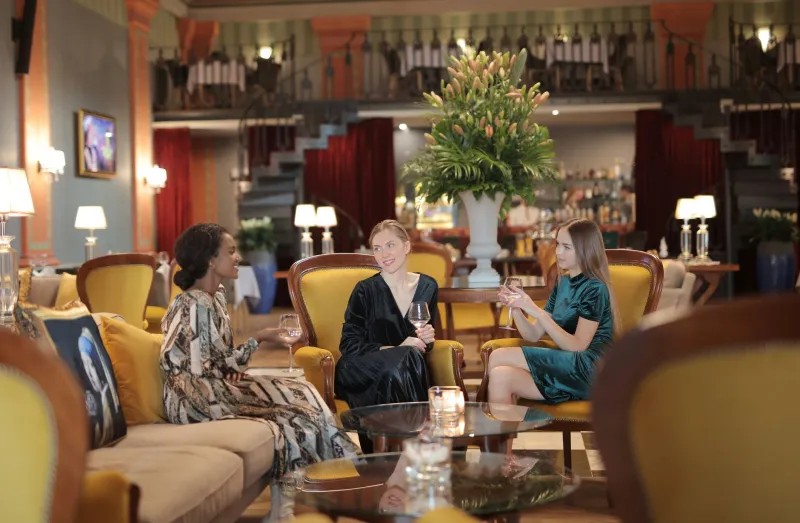
There is a particular kind of loneliness that arrives not from silence, but from being technically understood and fundamentally missed. A conversation can proceed smoothly on the surface — questions asked, answers given, pleasantries exchanged — while something essential remains untranslated. For American travelers seeking companion experiences in Chandigarh, this gap has historically been an unspoken concern. What they discover, often with considerable surprise, is that Chandigarh's most accomplished companion professionals have made linguistic fluency a cornerstone of their craft, and the effect on the quality of connection is difficult to overstate.
More Than Vocabulary: What Fluency Actually Means
It is worth distinguishing at the outset between functional language ability and the deeper kind of fluency that transforms an interaction. A person may possess an adequate working vocabulary in English — sufficient to navigate logistics, confirm arrangements, and exchange surface-level pleasantries — without possessing the linguistic agility that makes conversation feel effortless and alive.
True fluency, the kind that sophisticated American clients tend to notice immediately, involves something more layered. It encompasses the ability to track register — knowing when to speak formally and when to ease into casual familiarity. It includes an ear for regional American idiom, the kind of phrasing that varies meaningfully between a client from Boston and one from Nashville, between someone raised in the Pacific Northwest and another who grew up in South Florida. It means catching the subtle humor embedded in a deadpan observation, and returning it with appropriate timing rather than a beat too late.
Chandigarh's companion professionals who have invested seriously in language development understand that vocabulary is merely the raw material. What they are building with it is rapport — and rapport, in a premium companion context, is the entire product.
The American Vernacular and Why It Matters
Americans, broadly speaking, communicate with a particular rhythm and cultural vocabulary that reflects decades of shared media, regional identity, and social shorthand. References to specific cultural moments, sporting franchises, regional food culture, or the particular cadences of American humor are not incidental decorations on conversation — they are frequently the substance of it.
A companion who can engage authentically with these references — who understands why a comment about the Cubs carries a specific emotional weight for a client from Chicago, or why a particular phrase from a beloved American film lands differently depending on the decade in which a client came of age — is offering something qualitatively different from one who simply speaks grammatically correct English.
This cultural fluency, layered on top of linguistic competence, is what Chandigarh's most sought-after companions have developed through genuine curiosity about the backgrounds of the American men they serve. It is not performance. It is the result of sustained intellectual engagement with a culture not their own, and American clients can feel the difference immediately.
Navigating the Nuances of Regional American Identity
The United States is not a monolithic culture, and experienced companion professionals in Chandigarh are increasingly attuned to this reality. The communication style of a client from New York City — direct, fast-paced, comfortable with mild irreverence — differs substantially from that of a client from the American South, where warmth, indirection, and a certain unhurried courtesy tend to govern social exchange.
Companions who have developed sensitivity to these regional distinctions bring an additional dimension of attentiveness to their work. Rather than applying a single conversational template to every American client, they read and adapt — mirroring the energy and register that puts a particular individual most at ease. This is not manipulation; it is the same social intelligence that any skilled communicator employs when meeting someone new, elevated to a professional art form.
For the client, the experience of being truly read — of having one's communication style met and matched rather than accommodated with visible effort — creates a sense of genuine ease that is rare and, once experienced, becomes a significant factor in how they evaluate the quality of an encounter.
The Emotional Architecture of Language
Language carries emotional freight that goes well beyond its literal content. The word chosen to describe something — the specific adjective selected, the metaphor employed, the moment of hesitation before a particular phrase — all communicate something about the speaker's inner state and their relationship to the listener.
Companions in Chandigarh who have developed genuine multilingual fluency are often acutely aware of this emotional architecture. Many speak Hindi, Punjabi, and English with native-level comfort, and several have invested significantly in additional language study. This sustained engagement with multiple linguistic systems appears to cultivate a particular sensitivity to the emotional texture of speech — an ability to hear not just what is being said, but how it is being said, and what that reveals about the person saying it.
For American clients, who may arrive carrying the particular emotional guardedness that long-distance travel and unfamiliar settings tend to produce, this sensitivity can be genuinely disarming. The companion who catches the note of fatigue beneath a cheerful opener, or who recognizes the specific kind of humor that signals a client is beginning to relax, is offering a form of attentiveness that goes far beyond conversational competence.
Humor as the Highest Register
If vocabulary is the foundation of language and emotional attunement is its structure, humor is its highest and most demanding register. Humor requires a shared frame of reference, precise timing, a read of the other person's sensibility, and the confidence to commit to a joke without overexplaining it. It is, in many ways, the ultimate test of genuine fluency.
Chandigarh's companion professionals who have earned reputations for exceptional client experiences frequently cite their ability to be genuinely funny — not performatively so, but in the spontaneous, responsive way that emerges when two people are truly communicating — as among their most valued skills. American men, who often use humor as both a social lubricant and a measure of authentic connection, tend to respond to this with visible relief and pleasure.
An encounter in which genuine laughter occurs is qualitatively different from one that is merely pleasant. Laughter signals mutual understanding, shared perspective, and the kind of comfort that cannot be manufactured through effort alone. It is the sound of a communication gap closing.
A Competitive Distinction Worth Considering
For American men evaluating companion services internationally, linguistic and cultural fluency deserves more deliberate consideration than it typically receives. The practical logistics of an engagement — discretion, scheduling, presentation — tend to occupy the foreground of planning. But the quality of the actual human exchange is what determines whether an experience lingers in memory as genuinely meaningful or merely adequate.
Chandigarh's companion professionals who have invested in deep multilingual fluency are, in effect, offering a more complete version of the experience. They have done the work — the years of study, the sustained curiosity about American culture and its regional variations, the cultivation of emotional attunement across linguistic systems — so that the encounter itself can unfold with the naturalness and ease that genuine connection requires.
For the discerning American client, this is not a minor amenity. It is, quietly, everything.