Reading the Room: How Chandigarh's Most Elite Companions Decode What Clients Never Say Aloud
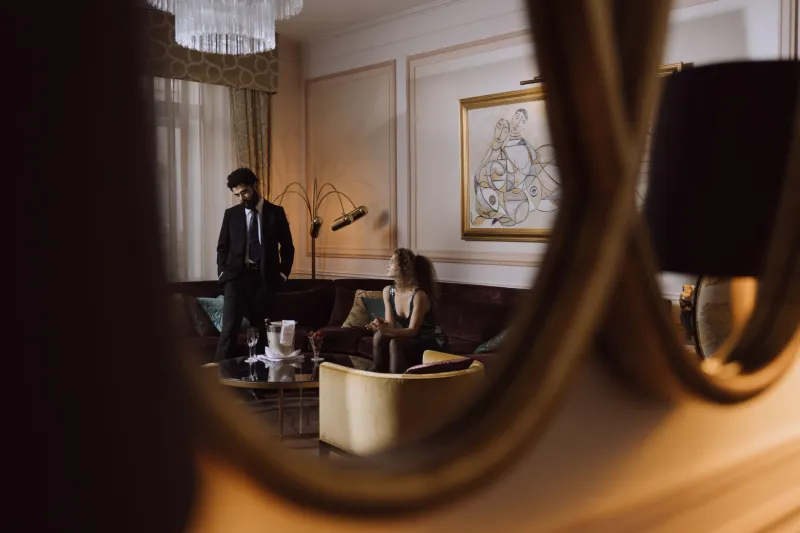
There is a particular kind of intelligence that no formal curriculum teaches — the ability to walk into a room, observe a stranger, and understand, within minutes, what that person genuinely needs. It is not telepathy. It is not guesswork. It is a disciplined, practiced form of perceptiveness that Chandigarh's most sought-after companions have refined into something approaching an art form.
For American clients accustomed to transactional service cultures — where preferences must be spelled out, forms must be filled, and every interaction is mediated by explicit instruction — encountering this level of intuitive attentiveness can feel genuinely disorienting. In the best possible way.
The Problem With Explicit Communication
Most service industries are built on the assumption that a client who knows what he wants will simply say so. This model works reasonably well for ordering a meal or booking a hotel suite. It works considerably less well when the service in question involves personal connection, emotional presence, and the subtle choreography of human interaction.
The truth is that many clients — particularly those who have achieved a certain degree of professional success — are not always fully conscious of what they are seeking when they engage a companion. They may describe wanting conversation, or relaxation, or simply pleasant company. But beneath those surface-level articulations often lie more nuanced needs: the desire to be genuinely heard after weeks of being deferred to; the wish to set aside professional authority and simply exist without expectation; the need for warmth that is neither performed nor conditional.
A companion who waits for these needs to be verbalized will frequently miss them entirely. The client himself may not have the language — or the self-awareness — to express them directly.
Observation as a Professional Discipline
What distinguishes Chandigarh's premier companions is not simply warmth or physical presence, though both matter. It is the rigorous attention they bring to behavioral signals that most people never consciously register.
Consider the way a client enters a space. The pace of his movement — whether he scans the room immediately or keeps his gaze low — communicates something about his current psychological state. The firmness or tentativeness of a greeting handshake, the speed at which he reaches for a drink, the way he positions himself in a chair: each of these micro-behaviors constitutes data. Individually, they are inconclusive. Collectively, they begin to sketch a portrait.
Voice modulation is equally revealing. A client who speaks quickly and at elevated volume when discussing his work, then slows and softens when the conversation shifts to personal matters, is signaling where his comfort and discomfort lie. A companion trained in these dynamics will not push toward the territory that creates tension. She will expand the space where ease already exists.
This is not manipulation. It is attentiveness elevated to a professional standard.
The Architecture of a Tailored Experience
Building an encounter that feels genuinely personalized — without having asked a single probing question — requires what might be described as layered responsiveness. Each exchange, however small, generates information that subtly recalibrates what comes next.
A companion might notice that a client responds with particular animation when a specific topic arises — regional cuisine, perhaps, or an offhand reference to a sport he follows. That signal, barely perceptible, becomes an anchor point. The conversation is gently steered back toward those waters. The client feels, without quite knowing why, that he is being understood.
Similarly, an elite companion learns to read comfort through physical proximity. Some clients are instinctively tactile; others carry a subtle guardedness that signals a preference for measured personal space. Honoring these unspoken preferences — without drawing attention to the fact that they have been noticed — is itself a form of sophisticated care.
American men, in particular, often arrive at these encounters carrying considerable professional and social armor. The culture rewards self-sufficiency and discourages overt expressions of need. A companion who dismantles that armor through force or direct inquiry will typically fail. One who creates conditions in which the armor becomes unnecessary — through patience, perceptiveness, and the quiet confidence of genuine attentiveness — will succeed in ways the client may struggle to articulate afterward.
Why This Skill Is Increasingly Rare
It would be tempting to assume that perceptiveness of this caliber is simply a natural gift — something a person either possesses or does not. That assumption underestimates the degree to which this capacity is cultivated.
The companions who consistently earn the highest regard within Chandigarh's professional community are those who treat their interpersonal skills as ongoing disciplines rather than fixed attributes. They reflect on encounters. They seek to understand where their read of a client proved accurate and where it fell short. They study human behavior not as an academic exercise but as a practical investment in their own professional excellence.
This commitment to continuous refinement is, frankly, more rigorous than what most American service industries demand of their practitioners. It is also what makes the resulting experience so distinctly different from what domestic markets typically provide.
The Lasting Impression of Being Truly Seen
There is a reason that clients who have experienced this level of perceptive companionship often describe it in terms that sound almost philosophical. Being genuinely observed — having one's unspoken preferences honored without having to expose them — creates a quality of connection that is difficult to replicate and nearly impossible to forget.
For many American men, it represents something they encounter rarely in professional life and, increasingly, in personal life as well: the experience of being in the presence of someone who is paying complete attention, not because it is required, but because it is, for that companion, a point of genuine professional and personal pride.
In Chandigarh's premier companion culture, anticipation is not a feature of the experience. It is the experience. And for the discerning gentleman who has grown accustomed to interactions that begin and end at the surface, that distinction is everything.